- Latestly AI
- Posts
- Will AI Be Smarter Than Humans by 2031 and Are We Ready for That?
Will AI Be Smarter Than Humans by 2031 and Are We Ready for That?
The AI moves founders and operators need to understand before it’s too late

Latestly AI
January 30, 2026
Top 3 Things in Today’s Latestly AI Edition
1. xAI Closes $20B Series E
2. Elon Musk Predicts AI Smarter Than Humanity by 2031
3. OpenAI's annualized revenue surpasses $20 billion in 2025
You asked for AI Foundations Course.
We’re building it !
A couple of weeks ago, we asked what kind of course you wanted.
The answer was clear: AI Foundations.
So we’re building it.

This course is built to help you actually understand AI how it works, how to think with it, and how to apply it in real work.
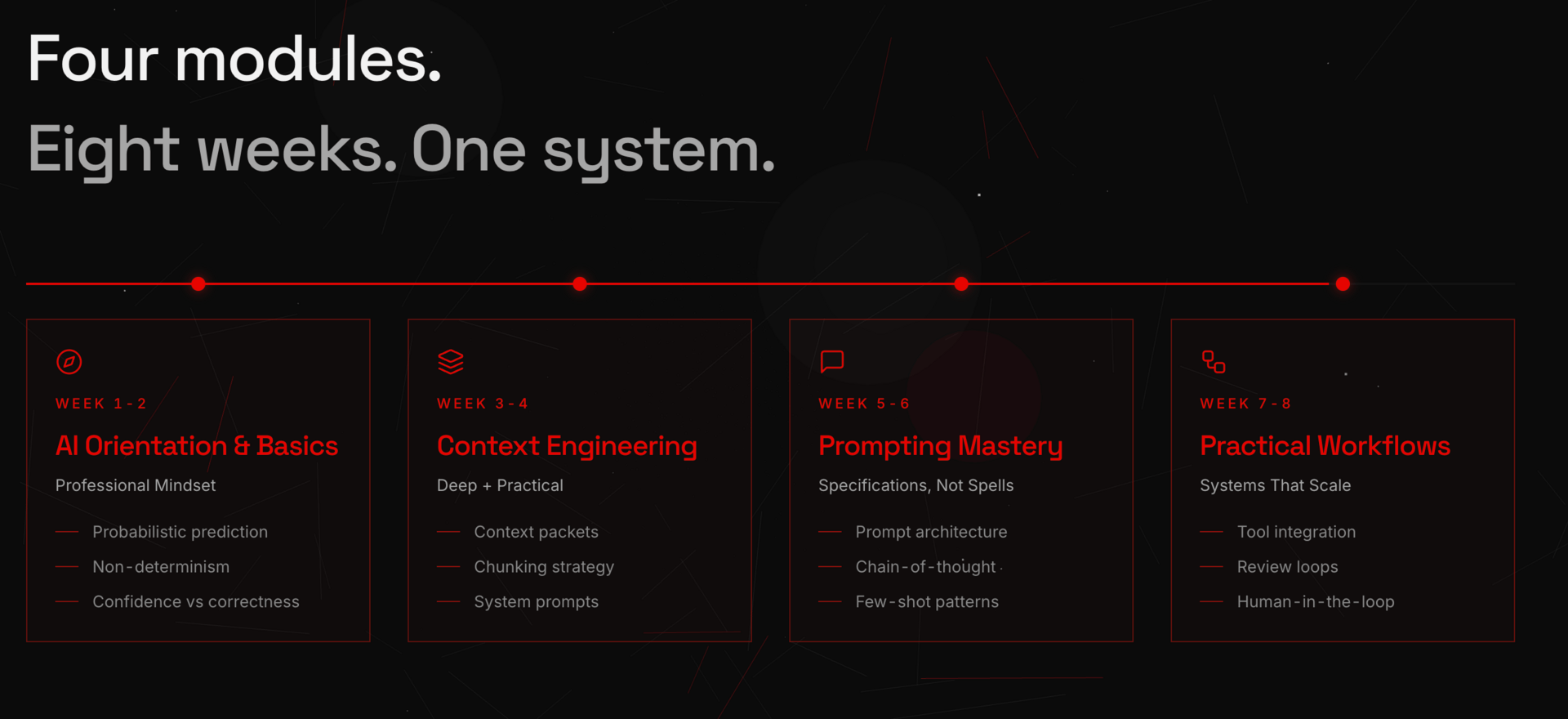
If you want a solid foundation that makes every new AI tool easier to use, join the waitlist for early access and first-cohort updates.
AI STORY OF THE WEEK
Elon Musk Predicts AI Smarter Than Humanity by 2031
At Davos 2026, Elon Musk doubled down on his timeline: AI will surpass individual human intelligence by end of 2026, and collective human intelligence within five years. He positioned AI and robotics as humanity's path to solving global poverty. But what does this actually mean technically?
What "Smarter Than Humanity" Actually Means
Musk's framing conflates three distinct technical milestones:
1. Narrow Superhuman Performance (Already Here)
AI systems already outperform humans on specific tasks: chess (Deep Blue, 1997), Go (AlphaGo, 2016), protein folding (AlphaFold, 2020), coding (GPT-5.2, 2025). These are domain-specific wins, not general intelligence.
2. General Human-Level Intelligence (AGI) — The 2026 Claim
Musk suggests AI reaching human-parity reasoning across any task by end of 2026. This is far more ambitious: it requires systems that can:
Transfer knowledge across domains without retraining
Reason about novel problems never seen in training data
Operate with energy efficiency similar to biological brains (~20 watts)
Current frontier models (GPT-5.2, Claude 3.7, Grok 4.1) show strong reasoning but still require:
Massive compute (kilowatts per inference)
Carefully structured prompts and guardrails
Human oversight for critical decisions
3. Superintelligence (ASI) — The 2031 Prediction
Surpassing collective human intelligence would mean AI autonomously:
Discovering new physics or mathematics
Optimizing complex systems (economics, climate, energy) better than human experts
Self-improving without human guidance
The Technical Bottlenecks Musk Ignores
Energy Efficiency Gap
Current LLMs use ~1–10 kilowatt-hours per million tokens. Human brains use ~20 watts continuously. To match biological efficiency while running AGI-level reasoning at scale would require a ~1000x efficiency improvement in transformers or a fundamental architecture shift (like Logical Intelligence's energy-based models or DeepSeek's mHC approach).
Test-Time Compute
Recent breakthroughs (TTT-Discover, OpenAI o1) show reasoning improves when models get more compute at inference time. But scaling this to AGI-level reasoning could require seconds or minutes per decision—acceptable for research, impractical for real-time robotics or autonomous systems.
Data Saturation
Frontier models are approaching internet-scale data exhaustion. Beyond text, video, and synthetic data, achieving true AGI requires:
Grounded multimodal reasoning (linking language to physics)
Embodied learning (robots learning from real-world interaction)
Temporal reasoning (planning across hours, days, years)
Current scaling laws suggest we're hitting diminishing returns without fundamentally new training paradigms.
What 2026 Could Actually Deliver
More likely scenario:
Specialized superhuman agents: Robotics (Atlas, Tesla Optimus) solving specific factory tasks autonomously
Enterprise AGI-lite: Systems like Humans&'s augmentation or Anthropic's Claude handling 80% of knowledge work tasks without human intervention
Multimodal reasoning jumps: Vision-language models finally achieving robust spatial reasoning (Project Genie's world models get more sophisticated)
What's unlikely by end of 2026:
A single model reasoning across physics, law, medicine, and engineering without retraining
Energy-efficient AGI running on edge devices
Self-improving AI without human feedback loops
Why Musk Says 2031, Not 2026
Musk's actual claim breakdown:
End of 2026: Narrow superhuman AI beats humans on individual tasks (already happening)
2031: Collective intelligence surpassing (requires convergence of many breakthroughs: energy, architecture, embodied learning, multimodal reasoning)
The gap reveals the real technical challenge: moving from task-level intelligence to systems-level reasoning. That requires not just better models, but new paradigms for:
How agents coordinate (swarms, hierarchies, markets)
How knowledge transfers across domains
How learning happens after deployment (continuous improvement)
The Real 2026 Inflection Point
What will shift dramatically by end of 2026:
Robotics enters production lines at scale — Atlas, Tesla Optimus, Boston Dynamics units deployed in real manufacturing; not just drones or warehouses
Agentic AI becomes standard enterprise tool — C-suite budgets shift from "experimenting with ChatGPT" to "replacing entire departments with agents"
Multimodal reasoning reaches inflection — World models (Project Genie, Sora 2.0) enable video understanding that rivals human spatial reasoning
Energy efficiency jumps 3–5x — New architectures (energy-based models, sparse transformers) reduce per-token cost significantly
Want to build your own AI business? Access all our premium guides with a free trial:
👉 Start Free Trial
GLOBAL AI NEWS HIGHLIGHTS
The Most Important AI Developments Happening Now : Region by Region
🌎 Americas
xAI completes $20 billion Series E funding, cementing Elon Musk's venture as major frontier AI competitor to OpenAI and Anthropic. TechCrunch, Jan 25, 2026
Merge Labs secures $250 million seed round led by OpenAI for brain-computer interface startup; Sam Altman-backed neural AI venture signals major push into neurotechnology. Bloomberg, Jan 22, 2026
OpenAI's annualized revenue surpasses $20 billion in 2025; CFO discloses 1.9 gigawatts of compute capacity and record weekly active users affirming commercial viability. OpenAI, Jan 19, 2026
OpenAI partners with ServiceNow to embed AI agents into business software, automating IT service management and customer support via GPT-5.2 reasoning. ServiceNow Blog, Jan 20, 2026
🌍 Europe
EU formally delays high-risk AI Act implementation from August 2026 to August 2027–2028; proposed amendments broaden SME simplifications and expand regulatory sandboxes. Osborne Clarke & EU Digital Strategy, Jan 14–26, 2026
UK Centre for AI-Driven Innovation launches at World Economic Forum at Imperial College; advancing responsible AI adoption across British industries and sectors. Imperial College Press, Jan 20, 2026
Microsoft launches Community-First AI Infrastructure Initiative, partnering to enable localized AI training in underserved regions with equitable access and sustainable practices. Microsoft, Jan 13, 2026
Anthropic extends Claude into healthcare with HIPAA-compliant tools and life sciences integrations (CMS clinical modules, ICD-10 codes); regulated domains now mainstream for Claude deployment. Anthropic Blog, Jan 2026
🌏 Asia-Pacific
PaleBlueDot AI raises $150 million Series B at $1+ billion valuation (Japan); B Capital-led round funds GPU capacity expansion for enterprise AI infrastructure across APAC. Reuters & Techloy, Jan 28, 2026
APAC startups raise combined $223.9 million in week ending Jan 29; capital flows primarily to AI infrastructure and fintech platforms, with selective early-stage deployment. Techloy, Jan 29, 2026
Logical Intelligence unveils "Kona," an energy-based AI reasoning model with Yann LeCun as research chair; signals renewed interest in non-LLM architectures beyond transformers. Logical Intelligence, Jan 22, 2026
Singapore commits $779 million to public AI research through 2030, reinforcing regional infrastructure investment and positioning as Southeast Asia's AI hub. Reuters, Jan 24, 2026
🌏 Africa
Aya Data (Ghana) secures $900K seed funding led by 54Collective; total capital raised reaches $1.15 million for scaling AyaGrow and AyaSpeech AI products across African markets. Startup Researcher, Jan 28, 2026
Kenya's AI-powered land registry system cuts fraud by 90% in pilot regions; demonstrates most practical governance AI application globally for institutional trust and transparency. The Standard & Government Press, Jan 2026
Nigeria approves first national AI policy focused on education, healthcare, and local startup ecosystem; foundational regulatory framework marks continent-wide adoption milestone. Pulse Nigeria, Jan 11, 2026
South Africa hosts AI innovation labs and incubation programs supporting biotech AI startups; ZAR R51,000–R300,000 funding available per project through The Innovation Hub. Impact Funding Report, Jan 6–23, 2026
This Week’s Top 5 AI Startup Fundraising Rounds
Name | Round & Size | Focus (Company Detail) |
|---|---|---|
xAI | Series E, $20B | Frontier AI model development; Elon Musk-backed competitor to OpenAI and Anthropic. |
Merge Labs | Seed, $250M | Brain-computer interface startup for neural AI integration; backed by OpenAI and Sam Altman. |
PaleBlueDot AI | Series B, $150M | GPU capacity expansion and enterprise AI infrastructure orchestration across APAC. |
CAST AI | Series B, $108M | Kubernetes cost optimization and GPU utilization via AI for enterprises. |
Ivo | Series B, $55M | AI contract intelligence platform for legal and business teams; automated contract analysis. |
Top 10 AI Unicorns — This Week’s Move
Name | Latest Valuation | Last Week’s Movement |
|---|---|---|
OpenAI | $500B | Annualized revenue surpassed $20B in 2025; operating 1.9 gigawatts of compute; partnered with ServiceNow for enterprise AI agent deployment; launched GPT-5.2 Thinking mode. |
Anthropic | ~$183B | Extended Claude into regulated healthcare (HIPAA-compliant); revealed 87% jailbreak detection improvement with minimal compute overhead; released open-weight safety models for developers. |
xAI | $20B+ | Completed Series E funding round at approximately $20 billion valuation; positioned as major frontier AI competitor alongside OpenAI and Anthropic. |
Databricks | ~$62B | Finalized $15.3B Series J and $5B debt financing in early 2026; Meta joined as strategic investor; leading data lakehouse and AI infrastructure platform. |
Mistral AI | ~$6B | Continued European independence narrative; backed by French government €800M foundational model funding program alongside Aleph Alpha. |
Scale AI | ~$7.3B | Expanding federal AI operations with new Washington D.C. office; government and defense AI data infrastructure focus growing. |
Hugging Face | ~$4.5B | Launched "Inference at the Edge" for on-device model deployment on smartphones and micro-devices; advancing privacy-first generative AI. |
Cohere | ~$7B | Thales partnership for naval in-service support; continued enterprise LLM deployments across government and defense sectors. |
Runway | ~$1.4B | Released Gen-4.5 video model and GWM-1 world model with native audio and robotics simulation capabilities in December 2025. |
Humans& | $4.5B | Raised record $480M seed round (Jan 20, 2026) at $4.5B valuation; founded by Anthropic/xAI/Google alumni; backed by Nvidia, Bezos, Google Ventures; building human-centric AI augmentation platform. |
How was this edition? |
We hope you enjoyed this Latestly AI edition.
📧 Got an AI tool for us to review or do you want to collaborate?
Send us a message and let us know!
Was this edition forwarded to you? Sign up here